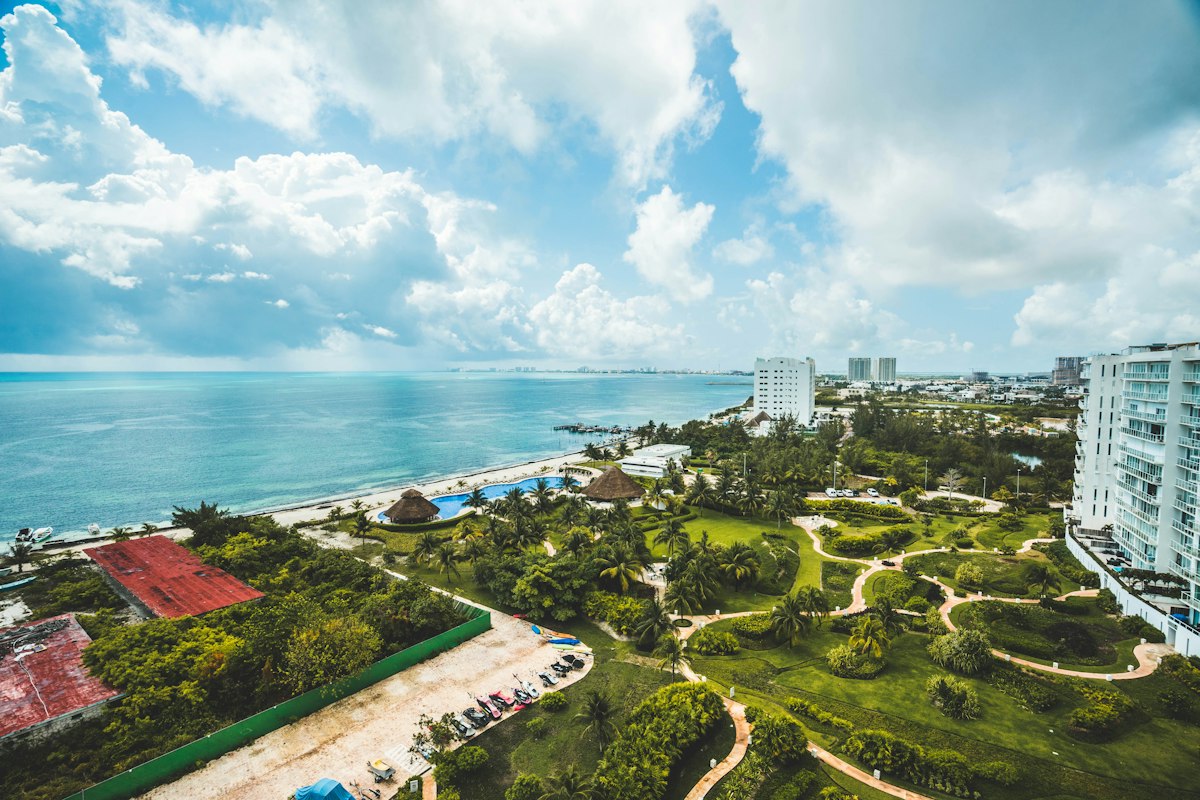

Los Cabos, Baja California Sur, Mexico
Overview
Los Cabos occupies one of the most geologically dramatic settings of any resort destination on earth — the southern tip of the Baja California Peninsula, a thousand-mile-long finger of desert that separates the Pacific Ocean to the west from the Sea of Cortez to the east. At the very tip, where these two bodies of water meet, stands El Arco — a granite arch weathered by wind and surf into one of Mexico's most iconic natural formations. The meeting of the Pacific and the Sea of Cortez here creates an extraordinary marine environment: Jacques Cousteau famously called the Sea of Cortez 'the world's aquarium,' and the marine biodiversity of Los Cabos waters — whale sharks, manta rays, humpback and blue whales, marlin, tuna, sea lions, and hundreds of fish species — validates that description.
Los Cabos spans two distinct towns connected by a 20-mile Tourist Corridor of luxury resorts along the Sea of Cortez coastline. Cabo San Lucas to the south is the livelier end — the marina, El Arco, Playa El Médano, sport fishing boats, nightlife, and the concentrated energy of a resort town. San José del Cabo to the north is quieter, more colonial, and more authentically Mexican — cobblestone streets, a historic mission church (Misión San José del Cabo, founded 1730), art galleries, boutique restaurants, and the Thursday Art Walk through the Zona Histórica. Between them, the Tourist Corridor concentrates the destination's finest and most famous resort properties.
Los Cabos closed 2025 with a record 3.77 million visitors — the highest in its history and a 129 percent increase over the past decade, according to the Los Cabos Tourism Board. The destination's Average Daily Rate (ADR) reached $440 USD in 2025, the highest of any destination in Mexico, up from $286 in 2017. Revenue Per Available Room (RevPAR) climbed from $203 to $306 over the same period. The destination is directly connected to 42 international airports, including 32 in the United States, with new routes from Nashville, Kansas City, and Ontario joining established hubs like Los Angeles, Dallas, New York, and Chicago. Tourism contributes $7.7 billion annually to the regional economy and approximately two out of three jobs in Los Cabos are tied to the industry.
Start planning your Los Cabos trip at palapavibez.com for curated itineraries and the best resort rates.
Fast Facts
Los Cabos has one of the sunniest climates in Mexico — over 350 days of sunshine annually and minimal rainfall for most of the year. The most comfortable season runs from October through June when temperatures average 24 to 29 degrees Celsius. July through September is the hottest period — temperatures can reach 38 degrees Celsius — with occasional chubasco tropical storms bringing brief but intense rainfall. Hurricane season technically runs June through November, though the Baja Peninsula's geography provides some protection from direct hurricane impacts. Most years the dry desert air keeps discomfort manageable even in summer. Peak tourist season is November through April — the most pleasant weather, highest hotel rates, and maximum whale watching opportunity. December through March is the prime period for whale watching.
Most visitors to Los Cabos from the US, Canada, UK, EU, and most other nationalities do not require a visa — Mexico operates a tourist permit system (FMM — Forma Migratoria Multiple) issued on arrival or increasingly included in the airline ticket. The permit allows stays of up to 180 days. The Mexican Peso is the official currency but US dollars are accepted universally throughout Los Cabos tourist areas, resorts, and restaurants. Card payments are standard everywhere. Most resort prices, activities, and restaurant bills are quoted in USD.
Los Cabos is one of the most expensive destinations in Mexico but represents reasonable value by international luxury resort standards — room rates at the finest properties ($400 to $1,200 per night) are below equivalent levels at comparable Caribbean or European destinations. Baja California Sur has one of the lowest crime rates of any Mexican state and Los Cabos specifically has invested heavily in safety infrastructure, tourist police, and security protocols. The destination's peninsular geography — isolated from mainland Mexico — contributes to its insulated safety profile. US travelers should check current State Department advisories before travel but should note that Los Cabos has consistently maintained a lower risk profile than many major Mexican cities.
Top Attractions
El Arco (Land's End) is the defining image of Los Cabos — a spectacular granite arch at the very tip of the Baja Peninsula where the Pacific Ocean and Sea of Cortez meet, accessible only by boat from the Cabo San Lucas marina. The arch frames a perfect circle of turquoise water and is most dramatically photographed from the water at sunrise or golden hour. Sea lions haul out on the rocks below, and pelicans wheel overhead. Glass-bottom boat tours, kayak tours, and sunset sailing cruises all incorporate El Arco. The stretch of beach at El Arco — Playa del Amor (Lover's Beach) on the Sea of Cortez side — is accessible only by water taxi and is one of the most scenic beaches on the Baja Peninsula.
Sport fishing is Los Cabos' most celebrated outdoor activity and the reason the town was first developed as a destination in the 1950s. The confluence of the Pacific and the Sea of Cortez creates a marine environment of extraordinary productivity — marlin (blue, black, striped), sailfish, dorado (mahi-mahi), tuna (yellowfin, bigeye), wahoo, and roosterfish are all available seasonally. The Bisbee's Black & Blue Marlin Tournament, held annually in October, is one of the world's richest sport fishing tournaments, with prizes reaching into the millions of dollars. Charter boats of all sizes depart daily from Cabo San Lucas marina — from pangas (small open boats) to 80-foot fully equipped sportfishers.
Recommendations
El Arco & Land's End
Granite arch at Baja's tip — accessible by boat from marina, sea lions, Playa del Amor, sunrise photography
Sport Fishing
World-class marlin, dorado, tuna year-round — Bisbee's Tournament in October, charters from $300–$3,000/day
Whale Watching
December–April — blue and humpback whales in UNESCO Sea of Cortez, largest animals ever to have lived on earth
Championship Golf
One&Only Palmilla (Nicklaus 27-hole), Quivira (cliff-top Pacific views), Cabo del Sol — among world's finest courses
San José del Cabo Zona Histórica
Colonial town, 1730 mission, art galleries — Thursday Art Walk Oct–June, Saturday Mercado Orgánico
Snorkeling & Diving
Chileno Bay and Santa María Bay — two marine reserves, best snorkeling in Los Cabos, accessible from beach
Sea of Cortez Kayaking
UNESCO World Heritage waters — kayak with sea lions, manta rays, sea turtles, whale sharks in season
Todos Santos Day Trip
1-hour north on Pacific coast — UNESCO Magic Town, Hotel California legend, surf, galleries, artisan food scene
Whale watching is one of the world's finest wildlife experiences in Los Cabos waters. From December through April, the Sea of Cortez corridor fills with humpback, blue, and fin whales on their annual migration between Arctic feeding grounds and warm-water breeding grounds. Blue whales — the largest animals ever to have lived on earth, reaching 30 meters in length — are reliably encountered in the deep waters off Los Cabos. Humpback whale breaching and singing is commonplace from December through March. Tours depart from both Cabo San Lucas marina and the East Cape area. The Sea of Cortez (Gulf of California) is a UNESCO World Heritage Site recognized for its extraordinary marine biodiversity.
Golf in Los Cabos has achieved a global reputation as one of the finest golf destinations in the world — a combination of year-round sunshine, dramatic desert-meets-sea settings, and a concentration of championship courses designed by Jack Nicklaus, Greg Norman, Tom Weiskopf, and other top designers. One&Only Palmilla's 27-hole Jack Nicklaus Signature course, Quivira Golf Club designed by Jack Nicklaus on volcanic cliffs above the Pacific, and Cabo del Sol Ocean Course by Jack Nicklaus (with the famous 17th hole played over a natural inlet of the Pacific) are the most celebrated. Los Cabos has hosted PGA Tour events and is among the top five golf destinations in Mexico by any ranking.
San José del Cabo's Zona Histórica is the cultural counterpoint to the resort energy of the Tourist Corridor — a preserved Mexican colonial town with a mission church at its center (founded 1730), cobblestone streets, and the most developed gallery and restaurant scene in Los Cabos. The Thursday Art Walk from 5 to 9pm during the high season (October through June) opens the galleries of San José's art district to the public with artists and champagne. The Mercado Orgánico on Saturday mornings brings local farmers, artisans, and food vendors to a weekly market that is the most authentically Cabo San José experience available.
Where to Stay
Los Cabos has one of the finest concentrations of luxury resort properties in North America — the 20-mile Tourist Corridor between Cabo San Lucas and San José del Cabo contains an almost unbroken sequence of five-star and ultra-luxury properties, each competing for the most dramatic desert-meets-sea setting. The key practical consideration is beach swimmability — most Corridor beaches face the open Sea of Cortez or Pacific and have strong currents making swimming dangerous. Only a handful of resort beaches are truly safe for swimming; identifying which properties have swimmable beaches dramatically affects the resort selection decision.
One&Only Palmilla is the flagship of Los Cabos luxury — built on the only naturally calm swimming cove on the Tourist Corridor, its 173 casitas and suites occupy a dramatic headland between two bays, with a 27-hole Jack Nicklaus Signature golf course, a spa celebrated as among the finest in Mexico, and service standards that have placed it consistently on Forbes Five Star and Michelin Key ratings. It is the resort that defines what Los Cabos aspires to be. Esperanza, Auberge Resorts Collection, sits on a dramatic clifftop between two coves near Pedregal — 123 casitas and villas with plunge pools, the celebrated Cocina del Mar cliffside restaurant serving lobster tacos and spicy margaritas above crashing waves, and an Auberge spa that is among the most acclaimed in Baja.
Recommendations
One&Only Palmilla
Only naturally calm swimming cove on the Corridor — Forbes 5-star, Nicklaus 27-hole golf, finest spa in Los Cabos
Esperanza, Auberge Resorts
Clifftop casitas between two coves — Cocina del Mar restaurant above crashing waves, Forbes 5-star, plunge pools
The Cape, A Thompson Hotel
Directly above El Arco — iconic rooftop bar at sunset, most photogenic views in Los Cabos, social vibe
Las Ventanas al Paraíso (Rosewood)
Most celebrated honeymoon resort in Los Cabos — personal butler service, hacienda villas, legendary romance
Chileno Bay, Auberge Resorts
Genuine swimmable beach — modern design, THE WELL spa, surf safaris by private catamaran
Zadún, Ritz-Carlton Reserve
East Cape marina — Tosoanis butler service, desert wellness sanctuary, away from Corridor crowds
The Cape, A Thompson Hotel in Cabo San Lucas, is the destination's most photographed and most distinctive property — positioned directly above El Arco with unobstructed views from every room, a legendary rooftop lounge bar where DJ sets accompany the Pacific sunset, and an energy that is deliberately more social and design-forward than the quieter corridor properties. Chileno Bay Resort & Residences, Auberge Resorts Collection, sits on one of the genuinely swimmable beaches of the Corridor — a long, protected bay with calmer water than most Baja beaches — with a resort design that feels like an open-air Greek village transplanted to the desert.
Las Ventanas al Paraíso, A Rosewood Resort, is the most romantically celebrated resort in Los Cabos — a hacienda-style property of villas and casitas with a level of personal service (including a dedicated butler who notes guest preferences and sets up personalized surprises throughout the stay) that has made it the honeymoon and anniversary choice for decades. Zadún, a Ritz-Carlton Reserve in Puerto Los Cabos on the East Cape, is the most secluded and design-modern property — cliffside suites above a marina beach, personal 'Tosoanis' (butlers), and a desert wellness sanctuary away from the Corridor crowds. Nobu Hotel Los Cabos, the first Nobu property in Mexico, combines the brand's Japanese minimalist aesthetic with Baja desert design and the signature Nobu restaurant.
Food & Drink
The food culture of Los Cabos is built on two foundational elements: the extraordinary seafood of the Sea of Cortez and the Baja Med culinary movement that pioneered a fusion of Mexican tradition, Pacific Rim technique, and local Baja ingredients that has influenced cooking across Mexico and beyond. The taco de pescado (fish taco) — a Baja invention, not Mexico City or the Yucatán — represents the purest expression of this tradition: freshly caught snapper or mahi-mahi, grilled or beer-battered, tucked into a warm corn tortilla with shredded cabbage, crema, pico de gallo, and lime. It costs $2 from a roadside stand and is one of the finest single bites available in North American street food.
The resort dining scene in Los Cabos has achieved genuine excellence — driven by the competition of world-class properties and the quality of local ingredients. Manta restaurant at The Cape, with its Peruvian-influenced ceviches and crispy shrimp tacos above the Pacific, is one of the most acclaimed restaurants in Baja. Cocina del Mar at Esperanza, perched on the clifftop above the Sea of Cortez, is one of the most dramatically situated restaurants in Mexico. The restaurant at One&Only Palmilla, Agua, serves contemporary Mexican cuisine with a view that matches the food. Mi Casa in Cabo San Lucas is the oldest and most beloved independent restaurant — a traditional Mexican cantina of extraordinary warmth serving classic Baja dishes from a family recipe collection stretching back decades.
Recommendations
Fish Taco
The Baja invention that changed Mexican street food — grilled snapper in corn tortilla, cabbage, lime, $2 from any taco stand
Cocina del Mar at Esperanza
Clifftop restaurant above the Sea of Cortez — lobster tacos, spicy margaritas, most dramatically situated restaurant in Baja
Manta at The Cape
Peruvian-Baja fusion — ceviches, crispy shrimp tacos, El Arco views, most acclaimed restaurant in Cabo San Lucas
Mi Casa, Cabo San Lucas
Oldest and most beloved independent restaurant in Cabo — traditional Baja cantina, family recipes, decades of history
Artisanal Mezcal
The Cape rooftop bar sets the standard — Oaxacan mezcal with orange and salt, the defining drink of Los Cabos nightlife
Agua Chile
Raw shrimp in lime and chili — the essential Baja appetizer, at every restaurant, the purest taste of the Sea of Cortez
Mezcal has become the defining spirit of the Los Cabos bar culture — not the mass-market tequila of tourist Mexico but artisanal mezcal from Oaxaca and the Sonoran Desert, served with orange, salt, and the complexity of a fine spirit. The Cape's rooftop bar is the most celebrated mezcal destination in the city. For craft beer, Baja Brewing Company in San José del Cabo and Cabo San Lucas is the most established local producer — its pale ale and IPA are the beers of choice at casual restaurants and beach bars throughout the destination. Agua Chile — raw shrimp marinated in lime and chili — is the essential Baja seafood appetizer, served at virtually every restaurant and representing the sea-to-table tradition of the peninsula.
Getting There
Los Cabos International Airport (SJD) is located approximately 30 kilometers north of Cabo San Lucas and 10 kilometers west of San José del Cabo — roughly equidistant between the two towns and adjacent to the Tourist Corridor resorts. The airport handled over 7.5 million passengers in 2025, making it one of Mexico's busiest aviation hubs. The airport has 42 international connections including 32 in the United States, with direct service from Los Angeles (approximately 2 hours 30 minutes), Phoenix (2 hours), Dallas (3 hours), Houston (2 hours 45 minutes), New York (approximately 5 hours 30 minutes), Chicago (3 hours 45 minutes), and numerous other US cities.
The range of direct US city connections to Los Cabos — including secondary markets like Nashville, Kansas City, Orange County, and Ontario, California — means that for most Americans, a direct flight to Los Cabos is available from their nearest major airport without connecting through a hub. This accessibility has been central to the destination's 130 percent visitor growth over the past decade. American Airlines, United, Delta, Southwest, Alaska Airlines, JetBlue, and Frontier all operate Los Cabos routes.
From the airport to resorts, taxis and private transfers are the standard transport — there is no public bus service to resort areas. Pre-booked private transfers from reputable companies provide the safest and most reliable airport-to-resort connection. Authorized airport taxi rates to Cabo San Lucas run approximately USD 40 to 70 depending on distance. Resort transfers arranged through hotels typically cost USD 50 to 120 per vehicle each way. Uber operates in Los Cabos from the airport and is a reliable and price-transparent alternative.
Within Los Cabos, taxis and Uber are the practical transport options for moving between towns and resorts. The 20-mile Corridor between Cabo San Lucas and San José del Cabo takes approximately 30 minutes by taxi or Uber. Rental cars are available at the airport for visitors who want to explore beyond the resort corridor — to Todos Santos (1 hour north on Pacific coast), La Paz (2.5 hours north), and the East Cape beaches.
Practical Info
Beach swimming safety is the most important practical consideration in Los Cabos. The majority of the Corridor's beaches face open ocean with strong Pacific swells and rip currents that make swimming dangerous regardless of conditions. Truly swimmable beaches in Los Cabos are limited — One&Only Palmilla beach, Playa Chileno, Playa Santa María, and Playa El Médano in Cabo San Lucas proper are the most reliably safe. Resorts on non-swimmable stretches compensate with extraordinary pool facilities. Always ask your resort and observe red and yellow flag warnings.
The Mexican Peso exchange rate context for 2026: the peso strengthened significantly against the USD in late 2025 and early 2026, which has made Los Cabos somewhat more expensive in dollar terms than in previous years. While USD is accepted everywhere, checking current exchange rates before travel is worthwhile. USD cash is the most practical currency — most resort and restaurant transactions at tourist establishments are priced and quoted in USD.
Recommendations
Check Beach Swimmability
Most Corridor beaches have dangerous currents — safe beaches: One&Only Palmilla, Chileno, Santa María, El Médano
Whale Watching Window
December–March — blue and humpback whales, book tours early in peak season
Todos Santos Day Trip
90 min north — UNESCO Pueblo Mágico, Pacific surf, farm-to-table restaurants, Hotel California legend
Peso Strengthening Context
2026 peso stronger vs USD — Los Cabos slightly more expensive than recent years, check current rates before travel
USD Accepted Everywhere
Most resort and tourist pricing quoted in USD — bring USD cash and cards, peso only needed for local markets
Sport Fishing Season
Peak marlin July–November — Bisbee's Tournament in October, year-round dorado and tuna available
Uber Operates Here
Uber available from airport and throughout Los Cabos — price-transparent alternative to negotiated taxis
Whale watching is highly seasonal — the December through March window is optimal for both humpback and blue whales. For sport fishing, the peak marlin season runs July through November with the Bisbee's Black & Blue Tournament in October. For winter visitors, whale watching and golf are the primary outdoor activities alongside beach resort relaxation. The combination of whale watching in the morning (depart 7am), golf in the afternoon, and sunset drinks at The Cape's rooftop produces a perfect winter day in Los Cabos.
Todos Santos, 90 minutes north of Cabo San Lucas on the Pacific coast, is one of the most charming towns in Baja — a UNESCO-designated Pueblo Mágico with a thriving arts community, exceptional farm-to-table restaurants, world-class surf breaks, and the legendary Hotel California (not actually the Eagles inspiration, but a charming boutique property that leans into the myth). The Baja Med culinary movement — rooted in Valle de Guadalupe wine country 5 hours north near Ensenada — has produced a farm-to-table culture that reaches Los Cabos through chefs who source from Baja's interior valley farms.