

New Zealand: The World's Greatest Nature Destination
- 9 min read
- By PalapaVibez
- Updated April 2026
- Vol. 2026 · No. 04
Overview
New Zealand (Aotearoa) is an island nation of approximately 5.1 million people in the southwestern Pacific Ocean, located 2,000 kilometers southeast of Australia. It consists of two main islands — the North Island (Te Ika-a-Māui) and the South Island (Te Waipounamu) — and numerous smaller islands, covering 268,021 square kilometers. Despite its relatively small size, New Zealand contains one of the most dramatic and varied natural landscapes on earth: active volcanoes (Ruapehu, Tongariro, White Island), the largest temperate rainforests in the Southern Hemisphere (Fiordland), geothermal fields (Rotorua, Taupo), marine wildlife (sperm whales at Kaikōura, dolphins throughout), alpine glaciers (Franz Josef, Fox), and fjords of extraordinary scale (Milford Sound, Doubtful Sound).
New Zealand welcomed 3.52 million international visitors in the twelve months ending January 2026 — a 5 percent increase year-on-year and 92 percent of pre-COVID levels. International visitor spending reached NZD$12.5 billion in 2025. Australia remains the largest source market at approximately 41.8 to 55 percent of all arrivals. The US has emerged as a standout performer with 9 percent year-on-year arrival growth to October 2025. Auckland Airport processed approximately 18.9 million passengers in calendar 2025, including more than 10 million international travelers. Tourism contributes approximately NZD$18 billion to GDP and supports 1 in 9 employment positions nationally.
New Zealand's tourism identity rests on three pillars: spectacular nature (100% Pure New Zealand marketing), adventure activities (bungee jumping, skydiving, glacier hiking, whitewater rafting — all invented or popularized in NZ), and Māori cultural heritage (the indigenous Polynesian culture of the tangata whenua, the people of the land). The country's film legacy (Lord of the Rings, The Hobbit, Narnia) adds a distinctive fourth dimension. Start planning at palapavibez.com.
Live visa data unavailable — verify before booking.
Check at IATA Travel CentreFast Facts
New Zealand's seasons are the reverse of the Northern Hemisphere. Summer (December to February) is warm (20 to 28 degrees Celsius), the most popular season for hiking, beach, and outdoor activities — and peak tourist season. Autumn (March to May) is golden, with fewer visitors and excellent walking conditions. Winter (June to August) transforms the South Island into a ski destination — Queenstown and Wanaka are the hub, with Remarkables, Coronet Peak, and Cardrona all excellent resorts. Spring (September to November) is the shoulder season — warming weather, wildflowers, and fewer crowds.
All visitors to New Zealand must obtain a New Zealand Electronic Travel Authority (NZeTA) before arrival — a quick online application (approximately NZD $23 to NZD $35 depending on nationality) valid for multiple entries over 2 years. This replaced the previous visa-waiver stamp system. Citizens of Australia are exempt. Apply at nzeta.immigration.govt.nz at least 72 hours before departure. A International Visitor Conservation and Tourism Levy (IVL) of NZD $35 is also charged as part of the NZeTA process.
The essential New Zealand transport decision is the car or campervan rental — the country is designed for road travel. The main tourist circuits (South Island: Queenstown → Milford Sound → Glaciers → Mount Cook → Christchurch; North Island: Auckland → Rotorua → Tongariro → Wellington) are entirely road-trip itineraries. Driving is on the left. Roads are generally excellent but mountain roads can close in severe weather — check NZTA and MetService before any alpine journey.
Top Attractions
Milford Sound (Piopiotahi) in Fiordland National Park is New Zealand's most iconic natural landmark — a 15-kilometer fjord carved by glaciers into Fiordland's ancient granite, with sheer rock faces rising up to 1,200 meters from sea level, permanent waterfalls (Stirling Falls, Lady Bowen Falls), and the instantly recognizable 1,692-meter peak of Mitre (Rahotu). Cruise boats depart from the Milford Sound terminal for 1.5 to 2-hour day cruises; overnight cruise options provide access to the fjord at dawn when the reflection is still. Milford Sound is 290 kilometers from Queenstown — most visitors access it as a full-day coach or drive excursion (5 to 6 hours each way). The Milford Track (Great Walk, 4 days, fully guided or independent) is the most famous tramping route in New Zealand.
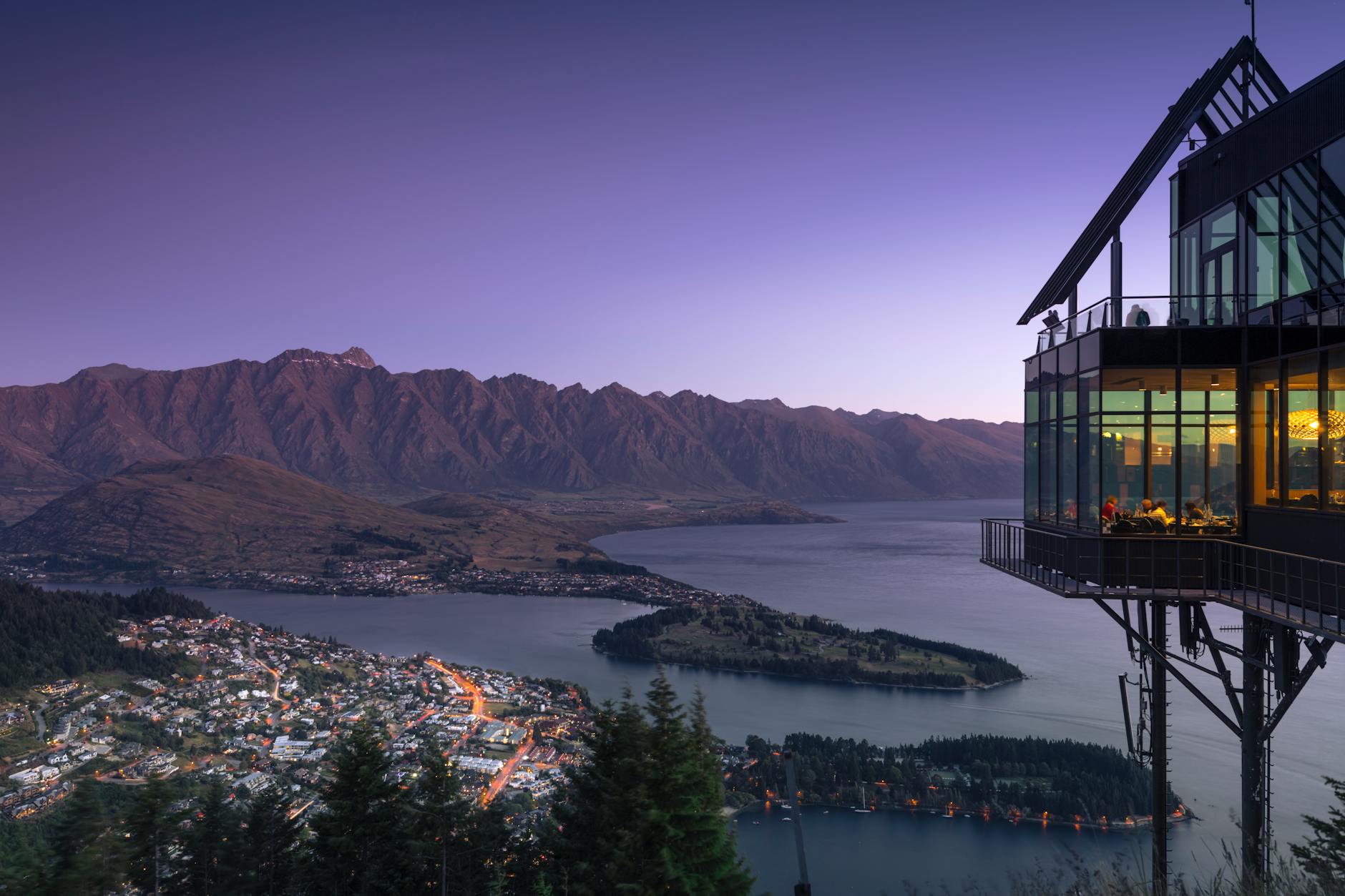
Queenstown is New Zealand's adventure capital — a town of approximately 40,000 permanent residents on the shores of Lake Wakatipu at 310 meters altitude, surrounded by the Remarkables mountain range. Bungee jumping was commercialized here in 1988 (AJ Hackett, Kawarau Bridge — the original commercial bungee, still operating). The adventure activity menu extends to jet boating, skydiving, canyon swinging, white-water rafting, paragliding, mountain biking, and the finest ski fields in Australasia (Remarkables, Coronet Peak — both within 45 minutes of town). In summer, Queenstown is a hiking and cycling base; in winter, the ski season draws visitors from Australia and beyond.
Recommendations
1 / 8The Tongariro Alpine Crossing on the North Island is the finest one-day hike in New Zealand — 19.4 kilometers across the volcanic plateau of Tongariro National Park (a UNESCO World Heritage Site, New Zealand's oldest national park), passing the Red Crater, South Crater, and the Emerald Lakes (three brilliant teal lakes in volcanic craters). The crossing climbs to 1,886 meters on the flanks of Mount Ngauruhoe (Mordor's Mount Doom in Lord of the Rings). The hike takes 6 to 8 hours; shuttle buses operate from Taupo and Tongariro Alpine Crossing. The crossing must not be attempted in adverse weather — check MetService the morning of.
Rotorua is the most concentrated geothermal landscape accessible to tourists in the Southern Hemisphere — the city sits on an active geothermal field where boiling mudpools, geysers, and hot springs erupt through suburban streets and parks. Te Puia (the best organized geothermal and Māori cultural park, home to Pohutu Geyser — the largest active geyser in the Southern Hemisphere), Wai-O-Tapu Thermal Wonderland (the most visually dramatic — champagne pools and silica terraces of extraordinary colors), and Waimangu Volcanic Valley (the youngest geothermal system on earth, formed in the 1886 Tarawera eruption) are the three major sites.
Where to Stay
New Zealand's accommodation ranges from DOC (Department of Conservation) huts on the Great Walks (basic, inexpensive, requiring advance booking in season) to some of the finest luxury lodges in the Southern Hemisphere. The lodge tradition — small, high-service properties with world-class cuisine, private guide access, and extraordinary natural settings — is New Zealand's signature hospitality format.
The Farm at Cape Kidnappers (Hawke's Bay, North Island) and The Lodge at Kauri Cliffs (Northland, North Island) are consistently ranked among the world's finest golf and lodge properties — the latter with the most dramatic cliff-edge golf course in the Southern Hemisphere. Blanket Bay at Lake Wakatipu near Queenstown is the most acclaimed South Island lodge — stone-and-timber construction, lake and mountain views, and Fiordland access from the property's own jetty.
Recommendations
1 / 4In Queenstown, the Eichardt's Private Hotel (lakefront, historic, 7 suites only — the most intimate luxury in town) and the Sofitel Queenstown are the finest city hotels. For Milford Sound, Milford Sound Lodge is the only accommodation inside the Sound — basic but extraordinary for access to the fjord at dawn before day visitors arrive. The Great Walks huts (Milford Track, Routeburn Track, Tongariro Northern Circuit) provide the most specifically New Zealand tramping experience.
Food & Drink
New Zealand's food culture has emerged as one of the Southern Hemisphere's finest over the past two decades — driven by extraordinary primary produce (Canterbury and Central Otago lamb, Marlborough Sounds seafood, Bay of Plenty kiwifruit, Hawke's Bay apples, Southland venison), a generation of internationally trained chefs, and the world-class wine regions of Marlborough, Central Otago, and Hawke's Bay.
New Zealand lamb is considered among the finest in the world — the combination of free-range high-country farming, clean water, and the specific pasture conditions of the Canterbury Plains and Otago produce a lamb of extraordinary flavor. Crayfish (New Zealand rock lobster) from the Kaikōura coast and the West Coast are among the finest in the Pacific. The hangi (a traditional Māori earth oven cooking technique using heated stones and geothermal heat in Rotorua) produces slow-cooked pork, chicken, and vegetables of deep, smoky flavor — the most specifically New Zealand culinary tradition.
Recommendations
1 / 5Marlborough Sauvignon Blanc established New Zealand as a serious wine country internationally in the 1980s and remains one of the world's finest expressions of the variety — the Wairau Valley's combination of sunshine, cool nights, and free-draining soils produces Sauvignon Blancs of intense tropical fruit and high natural acidity that have no equivalent in France or California. Central Otago Pinot Noir (the world's southernmost wine region, 45 degrees south) has established itself as the finest Pinot in the Southern Hemisphere. Both wine regions are accessible by car on the South Island.
Getting There
Auckland Airport (AKL) is New Zealand's main international gateway — the busiest airport in the country by far, handling approximately 18.9 million passengers in calendar 2025 including over 10 million international travelers. The airport is approximately 21 kilometers south of Auckland's city center (approximately 30 to 50 minutes depending on traffic). The airport has direct connections from Sydney (2.5 hours), Melbourne (4 hours), Brisbane (3.5 hours), Los Angeles (12 hours), San Francisco (12.5 hours), Singapore (10 hours), Hong Kong, Tokyo, and other major hubs.
From the US, Air New Zealand and United Airlines fly direct from Los Angeles to Auckland in approximately 12 hours, and Air New Zealand also operates from San Francisco, Houston, and Honolulu. From the UK, there are no direct non-stop flights — connections through Singapore (Singapore Airlines), Hong Kong, or Los Angeles take approximately 24 to 26 hours total. From Australia, direct flights from every major Australian city make New Zealand extremely accessible — Sydney to Auckland in 2.5 hours is one of the most well-served Trans-Tasman routes.
Christchurch Airport (CHC) is the main South Island gateway — 12 kilometers from central Christchurch with direct international connections from Sydney, Melbourne, Singapore, and other cities. For visitors focusing on the South Island (Queenstown, Milford Sound, West Coast glaciers), flying directly to Christchurch and traveling south is more efficient than routing through Auckland.
Practical Info
The classic New Zealand two-island itinerary of 14 to 21 days: North Island (Auckland → Hobbiton → Rotorua → Tongariro Alpine Crossing → Wellington, 6 to 7 days) + ferry or flight to South Island (Marlborough Wine Region → Kaikōura whale watching → Christchurch → West Coast glaciers → Queenstown → Milford Sound → back to Queenstown, 8 to 10 days). This covers New Zealand's essential experiences without rushing. A 10-day trip should focus on the South Island (the more dramatic of the two) or split time between Queenstown, Auckland, and Rotorua.
Great Walks booking: New Zealand's 10 Great Walks (Milford Track, Routeburn Track, Tongariro Northern Circuit, Abel Tasman Coast Track, and others) require hut and campsite bookings through the DOC (Department of Conservation) booking system at doc.govt.nz. The Milford Track and Routeburn Track sell out within hours of opening in October for the following summer season. Book the morning the booking window opens.
Recommendations
1 / 5New Zealand weather is highly variable — 'four seasons in one day' is a genuine local experience, not a cliché. The Tongariro Alpine Crossing should never be attempted in poor weather — fatalities have occurred. Franz Josef and Fox Glacier helicopter tours cancel regularly due to cloud. The West Coast can receive over 5 meters of rain per year. Always check MetService (metservice.com) the morning of any outdoor activity and build weather contingency into South Island itineraries.
Frequently asked
Is New Zealand (Aotearoa) safe for tourists?
Yes, New Zealand is generally considered a very safe destination for tourists. The country has low crime rates, political stability, and well-developed infrastructure to support visitors. However, it's still important to exercise normal precautions, such as being aware of your surroundings and not leaving valuables unattended.
What is the best time of year to visit New Zealand (Aotearoa)?
The most popular time to visit New Zealand is during the summer months of December to February, when the weather is warm (20 to 28 degrees Celsius) and ideal for outdoor activities like hiking, beach visits, and exploring the country's natural wonders. However, the shoulder seasons of spring (September to November) and autumn (March to May) can also be excellent times to visit, with fewer crowds and milder temperatures.
Do I need a visa to visit New Zealand (Aotearoa)?
Most visitors to New Zealand do not require a visa, as the country participates in the visa waiver program. Travelers from eligible countries, including the United States, Canada, and many European nations, can enter New Zealand for up to 90 days without a visa. However, it's important to check the specific entry requirements for your nationality before your trip.
What is the local currency in New Zealand (Aotearoa) and how much should I budget?
The local currency in New Zealand is the New Zealand dollar (NZD). Prices in New Zealand can vary, but a typical daily budget for a solo traveler can range from NZ$100 to NZ$200, depending on your accommodation, transportation, and dining preferences. Luxury experiences and activities can increase the budget, while budget-friendly options like hostels and self-catering can help reduce costs.
How do I get to New Zealand (Aotearoa)?
Auckland Airport (AKL) is New Zealand's main international gateway, handling approximately 18.9 million passengers in 2025, including over 10 million international arrivals. Many major airlines offer direct flights to Auckland from destinations around the world, including the United States, Europe, and Asia. Domestic flights within New Zealand are also widely available, connecting the main cities and tourist hubs.
How many days should I plan to spend in New Zealand (Aotearoa)?
The recommended length of stay in New Zealand can vary depending on your interests and travel style, but most experts suggest a minimum of 10-14 days to experience the country's highlights. This allows enough time to explore both the North and South Islands, visit iconic destinations like Milford Sound and Queenstown, and engage in outdoor activities. However, those with more time can easily spend 2-3 weeks or longer to fully immerse themselves in New Zealand's diverse landscapes and culture.
Is Milford Sound worth visiting in New Zealand (Aotearoa)?
Yes, Milford Sound is considered one of the top natural wonders of New Zealand (Aotearoa). This iconic fjord, with its towering cliffs, cascading waterfalls, and abundant wildlife, is a must-see destination. Visitors can take a scenic cruise to experience the stunning dawn reflections on the still waters.
What is the Tongariro Alpine Crossing in New Zealand (Aotearoa)?
The Tongariro Alpine Crossing is one of the best day hikes in New Zealand (Aotearoa). This 19.4km volcanic landscape trail takes hikers through the Red Crater, Emerald Lakes, and past the iconic Mount Doom from the Lord of the Rings films. It's a challenging but rewarding hike, so it's important to check the weather conditions before attempting it.
How can I get around New Zealand (Aotearoa) without a car?
New Zealand (Aotearoa) has excellent public transportation options for getting around without a car. Travelers can take buses, trains, and ferries to explore the country. For example, the Interislander ferry connects the North and South Islands, and Queenstown has a convenient public bus system for getting around the adventure capital.
What is the must-try food experience in New Zealand (Aotearoa)?
A traditional Māori hangi feast is a must-try food experience in New Zealand (Aotearoa). This slow-cooked meal of pork, chicken, and vegetables is prepared in an underground oven, known as a hangi. Visitors can enjoy this authentic cultural experience, along with Māori song and dance performances, in Rotorua.
Which is the best area to stay in Queenstown, New Zealand (Aotearoa)?
For the ultimate luxury experience in Queenstown, New Zealand (Aotearoa), the Eichardt's Private Hotel is the top choice. This boutique hotel offers just 7 suites with stunning lakefront views and is considered the most intimate and exclusive accommodation in the adventure capital.
If New Zealand (Aotearoa) caught your eye…


Travel Intelligence byPalapaVibez