

Savoie: The French Alps at Their Most Serious
- 12 min read
- By PalapaVibez
- Updated July 2026
- Vol. 2026 · No. 07
Overview
Savoie is a department in eastern France, wedged against the Italian border in the heart of the Alps, and it contains the greatest concentration of world-class ski terrain anywhere on the planet. Its capital is Chambéry. Its eastern valleys, the Tarentaise and the Maurienne, hold Courchevel, Méribel, Val Thorens, Val d'Isère, Tignes, Les Arcs, La Plagne and Val Cenis. Its western half holds lakes, spa towns, and vineyards that most winter visitors never see.
Before anything else, resolve the naming confusion, because it causes real booking errors. Savoie and Haute-Savoie are two separate departments. Haute-Savoie, immediately to the north, contains Annecy, Chamonix, Mont Blanc, Megève, and Lake Geneva. Savoie contains the Tarentaise and Maurienne resorts listed above plus Chambéry, Aix-les-Bains, and Lac du Bourget. They are both the historic Savoy region and both are the French Alps, but they are two hours apart and booking against the wrong one is a genuinely common and expensive mistake.
The region's identity is not simply French. Savoy was an independent duchy and later part of the Kingdom of Sardinia, and it only joined France in 1860 following a plebiscite. That history shows in the architecture, the dialect, the food, and a mountain identity that residents hold distinctly. Albertville hosted the 1992 Winter Olympics, and the infrastructure built for those games is much of why the valley access roads and lift systems are as good as they are today.
The obvious reason to come is snow, and Savoie's case is strong: Les Trois Vallées is the largest interconnected ski area in the world at over 600 kilometres of linked pistes, Val Thorens at 2,300 metres is Europe's highest resort with correspondingly reliable snow, and Val d'Isère and Tignes together form the Espace Killy with glacier skiing that extends the season at both ends. This is not a region with a good ski area; it is the region other ski regions are measured against.
The less obvious reason is summer, and it is why Savoie appeared on Expedia's 2026 rising list with searches up 51 percent alongside a sustainability screening pass. The Vanoise National Park, France's first, covers a large share of the eastern department. Lac du Bourget is France's largest natural glacial lake. The Route des Grandes Alpes crosses passes above 2,000 metres. Summer prices are a fraction of winter, and the same valleys are entirely different places. Plan your Alps trip at palapavibez.com.
Live visa data unavailable — verify before booking.
Check at IATA Travel CentreFast Facts
Savoie runs two distinct seasons and they are genuinely different holidays. The winter season runs roughly from early December to late April, with the high-altitude resorts extending it at both ends: Val Thorens typically opens in November and some Tarentaise areas run into May, while glacier terrain at Tignes offers skiing outside the standard season entirely. Peak demand and peak pricing fall over Christmas and New Year, and over the February school holidays, when both French and other European school breaks overlap.
Summer, roughly June through September, is the region's undersold half. The same valleys become hiking, cycling, via ferrata, paragliding, and lake territory, with the Vanoise National Park at its best in July and August when the high trails are clear of snow. Prices drop dramatically, many resort apartments are available at a fraction of winter rates, and the mountains are considerably quieter than the Alps' summer honeypots further north. Note that some high resorts largely close in the shoulder months of May, June, October, and November, when neither season is running.
For skiing specifically, the trade-off between periods is worth understanding. January generally has the best snow-to-price ratio, with cold reliable conditions and lower crowds outside the New Year peak. February is the busiest and most expensive month across the board. March and early April often deliver excellent conditions with longer days and better weather, and the high Tarentaise resorts hold snow well into spring where lower altitude areas do not.
France is in the Schengen Area, so US, UK, Canadian, Australian and most other visa-exempt travellers can visit for up to 90 days in any 180-day period without a visa. ETIAS, the EU's forthcoming travel authorisation, is not yet in force. The EU removed its previously stated Q4 2026 launch target in mid-2026 and the launch is officially unscheduled, with 2027 the realistic expectation. Any website currently accepting ETIAS applications is fraudulent.
Top Attractions
Les Trois Vallées is the region's headline and a genuine world record: over 600 kilometres of interconnected pistes linking Courchevel, Méribel, Val Thorens, Les Menuires, Saint-Martin-de-Belleville, Orelle and Brides-les-Bains on a single lift pass. The scale is the point. You can ski from one valley to another and back across a full day without repeating a run, and intermediate skiers in particular get more out of it than almost anywhere else. Val Thorens, at 2,300 metres, is the highest resort in Europe and the reason the area's snow record is what it is.
The Espace Killy, linking Val d'Isère and Tignes, is the other major domain and is generally regarded as the more serious skier's choice. Around 300 kilometres of piste, higher average difficulty, the legendary Face de Bellevarde run that hosted Olympic and World Championship downhills, and glacier terrain on the Grande Motte above Tignes that extends the season well beyond the norm. Val d'Isère has the better village atmosphere; Tignes has the higher and more purpose-built infrastructure.
Recommendations
1 / 8Paradiski connects Les Arcs and La Plagne via the Vanoise Express double-decker cable car, forming another vast linked domain of around 400 kilometres. Les Arcs is notable for being largely car-free and pedestrian, accessed by funicular from Bourg-Saint-Maurice, and for architecture that was deliberately designed to sit into the mountainside rather than on it. La Plagne is the more family-oriented half and hosts the Olympic bobsleigh track from 1992, which the public can ride.
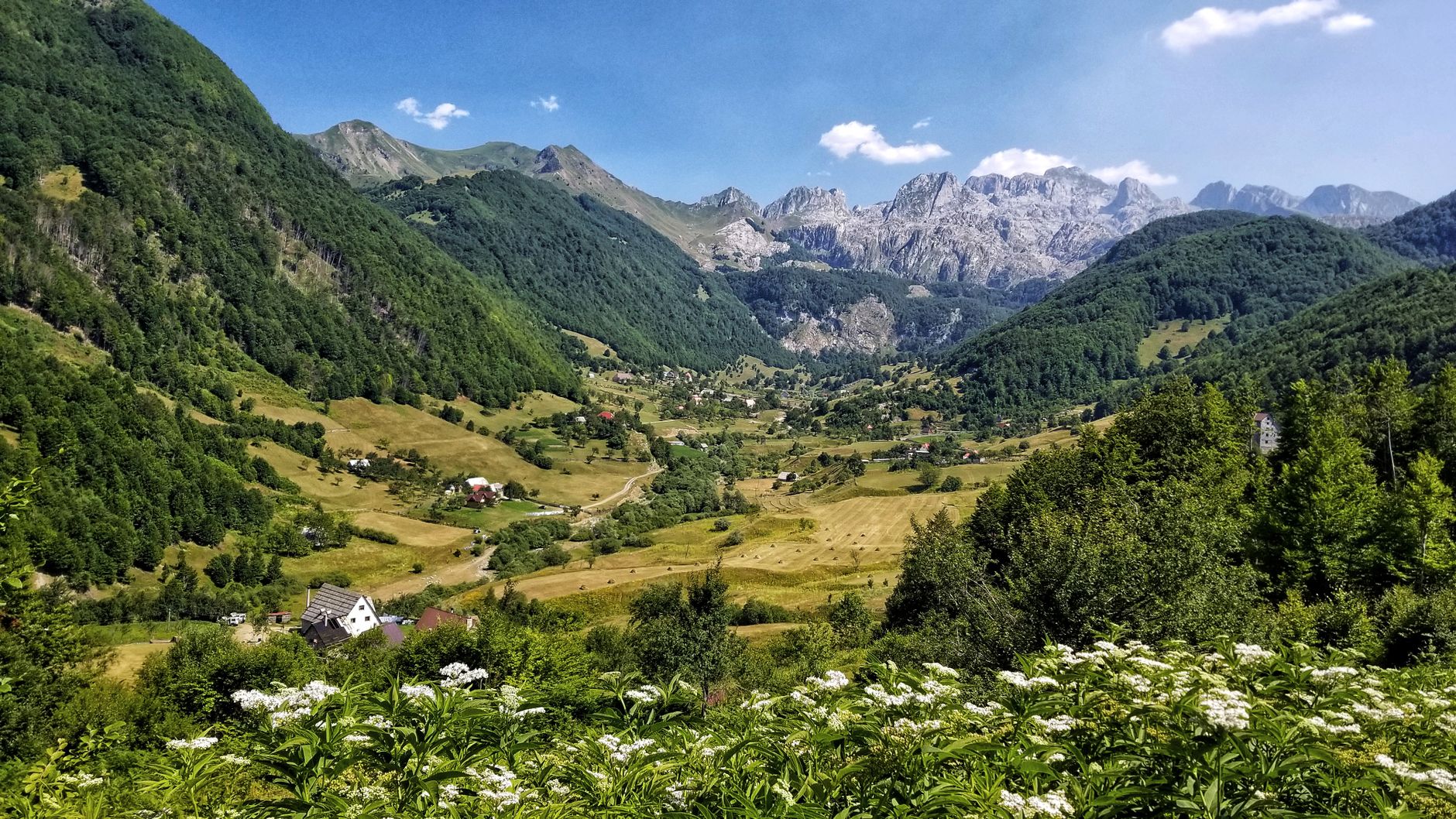
Away from lifts, the Vanoise National Park was France's first national park and covers a substantial part of eastern Savoie, protecting ibex, chamois, marmots, and golden eagles across high alpine terrain. Summer hiking here is exceptional and considerably less trafficked than Mont Blanc's routes. Bonneval-sur-Arc, in the high Maurienne, is listed among the most beautiful villages in France and is a genuinely preserved stone mountain village rather than a resort.
The western half of the department is the part winter visitors skip and it rewards a couple of days. Chambéry, the historic capital, has a genuinely handsome old town and the Château des Ducs de Savoie. Aix-les-Bains is a belle-époque spa town on Lac du Bourget, France's largest natural lake of glacial origin. Conflans, the medieval village above Albertville, is among the most attractive in the region. And the Apremont and Abymes vineyards on the slopes below produce the crisp white wines that pair with everything the mountain kitchen serves.
Where to Stay
In Savoie the resort you pick is effectively the holiday you get, more so than the individual hotel, and the differences between them are substantial. The broad split: Courchevel and Val d'Isère for prestige and atmosphere, Val Thorens and Tignes for altitude and snow certainty, Les Arcs and La Plagne for family value and linked terrain, Les Menuires and Saint-Martin-de-Belleville for Three Valleys access at lower cost.
Courchevel is the luxury benchmark, particularly Courchevel 1850, which holds one of the highest concentrations of five-star hotels and Michelin-starred restaurants of any ski resort in the world. It is genuinely expensive. Crucially, Courchevel is a set of villages at different altitudes, numbered 1550, 1650 and 1850 in the old system, and the lower villages offer meaningfully cheaper access to identical skiing. Méribel occupies the middle valley and is more traditionally chalet-built and British-popular, sitting central to the whole Three Valleys network.
Recommendations
1 / 6Val Thorens and Tignes are the snow-certainty choices and both are purpose-built high-altitude resorts rather than converted villages. That means ski-in ski-out convenience and a season that starts early and finishes late, at the cost of architectural charm and tree cover. Val d'Isère, by contrast, retains a genuine village core and is the pick for anyone who wants strong skiing and an actual place to walk around in the evening.
For value, Les Menuires and Saint-Martin-de-Belleville sit in the same Three Valleys system as Courchevel at a fraction of the price, with Saint-Martin in particular being a traditional village that has kept its character. La Plagne and Les Arcs are the family standards, with extensive beginner and intermediate terrain, apartment-heavy accommodation, and easier budgets. Brides-les-Bains, at the bottom of the valley, is the cheapest Three Valleys access of all and connects by gondola.
One structural note that saves money: French Alpine accommodation is dominated by self-catering apartments and chalets rather than hotels, and the standard changeover day is Saturday. Booking a Sunday-to-Sunday or midweek stay is often difficult and sometimes impossible, and prices are set weekly. For summer trips this relaxes considerably, and the valley towns of Chambéry, Aix-les-Bains, and Albertville offer conventional hotels at normal French pricing year-round.
Food & Drink
Savoyard cooking is mountain food built for altitude and cold, and it is essentially a cuisine of cheese, potatoes, cured pork, and white wine. It is unapologetically heavy, and it makes complete sense after a day on the mountain and almost none in any other circumstance. The region's cheeses are the foundation, and several hold protected designation: Beaufort, Reblochon, Tomme de Savoie, and Abondance, all produced from mountain pasture milk.
Tartiflette is the dish everyone comes for: potatoes, lardons, and onions baked under a whole Reblochon until it collapses into the pan. It is worth knowing that despite its traditional reputation it was popularised in the 1980s by the Reblochon producers' association, which does nothing to diminish it. Raclette is the communal one, a half-wheel of cheese melted and scraped over potatoes, charcuterie, and pickles. Fondue savoyarde uses a blend of the local cheeses with white wine and kirsch, and diots, the local pork sausages, are simmered in white wine with onions.
Recommendations
1 / 6Beaufort deserves particular attention. Produced in the Beaufortain valley from the milk of Tarine and Abondance cows grazing high summer pasture, it is a firm cooked-curd cheese frequently described as the prince of gruyères, and the summer-pasture version, Beaufort d'été or chalet d'alpage, is markedly better than the winter production. Buy it at a cooperative in the valley rather than a resort shop, where it costs considerably less.
The wine is the genuine surprise and almost nobody outside France drinks it. Savoie's vineyards, mostly on the slopes around Chambéry, produce crisp mineral whites from indigenous grapes: Jacquère in the Apremont and Abymes appellations, Altesse for the fuller Roussette de Savoie, and Mondeuse for a peppery red. These wines are inexpensive, they pair precisely with the cheese-heavy food they evolved alongside, and they are barely exported. Drink them here.
For après, Génépi is the regional digestif, a herbal liqueur made from alpine artemisia flowers, served ice cold and traditionally at the end of a heavy meal. Vin chaud, mulled wine, is the mountain standard on the slopes. Resort après-ski varies enormously by resort, with Val Thorens and Val d'Isère having the liveliest scenes and the quieter villages offering considerably more restrained evenings. Restaurant prices on the mountain are steep everywhere, so lunch in the valley or self-cater if budget matters.
Getting There
The train is Savoie's genuine advantage over most ski regions, and it is underused by international visitors. Direct TGV services run from Paris to Chambéry, Albertville, Moûtiers, Aime-la-Plagne, and Bourg-Saint-Maurice, putting you at the valley floor beneath the major resorts without a car. Moûtiers is the station for Courchevel, Méribel, Val Thorens, and Les Menuires. Bourg-Saint-Maurice serves Les Arcs, via a funicular that runs directly from the station, plus Tignes and Val d'Isère by road transfer. Paris to Bourg-Saint-Maurice runs roughly four and a half hours.
Seasonal ski trains extend this further. Direct services have operated from London to the Tarentaise stations during the winter season, allowing a city-centre to valley-floor journey without flying at all, and French domestic and European ski trains run heavily on winter Saturdays to match the changeover day. These services are seasonal and their operation varies year to year, so verify current schedules rather than assuming.
By air, Geneva is the primary gateway for Savoie despite being in Switzerland, with extensive international service and transfers of roughly two to three hours to the Tarentaise resorts. Lyon Saint-Exupéry is the main French option at around two to three hours, and Grenoble and Chambéry both offer smaller, heavily seasonal winter charter service. Chambéry Airport in particular operates mainly for winter charters and is very limited outside the ski season.
There are no direct flights from North America to any of the regional airports. US and Canadian travellers connect through Paris, London, Amsterdam, or Frankfurt to Geneva or Lyon, then transfer by road or rail. An alternative worth considering is flying into Paris and taking the direct TGV, which avoids a mountain road transfer entirely and is frequently more comfortable than it sounds.
On the ground, a car is genuinely optional in winter and useful in summer. Resort transfer companies run scheduled and private services from Geneva, Lyon, and the TGV stations, and most Savoie resorts are designed around ski-in ski-out or free shuttle systems, so a car often just becomes an expensive parking problem. In summer, when you want the Vanoise trailheads, the lakes, Chambéry, and the high passes, a car becomes worthwhile. Note that snow chains or winter tyres are legally required in mountain areas during the winter period.
Practical Info
Get the department right before you book anything. Savoie and Haute-Savoie are separate, and Annecy, Chamonix, Mont Blanc, and Megève are all in Haute-Savoie rather than Savoie. If you are booking a Savoie resort, your reference points are Courchevel, Méribel, Val Thorens, Val d'Isère, Tignes, Les Arcs, La Plagne, Chambéry, and Lac du Bourget. Mismatching a flight, transfer, or accommodation across the two departments puts you roughly two hours from where you meant to be.
Understand the Saturday changeover before you plan dates. French Alpine chalets and apartments overwhelmingly run Saturday to Saturday on weekly pricing, which is why transfer traffic and TGV ski trains all cluster on that day. Booking a midweek or Sunday-start stay is often difficult and sometimes not offered at all. Plan around it rather than fighting it, and if you can travel on a non-changeover day you will find roads and transfers dramatically quieter.
Recommendations
1 / 8A workable winter week: arrive Saturday at Moûtiers or Bourg-Saint-Maurice by TGV, transfer to resort. Ski Sunday through Friday, using at least one day to cross into a neighbouring valley on the linked pass, which is the entire point of the Three Valleys or Paradiski. Build in one non-ski day for a valley trip, a spa, or a mountain restaurant lunch, because six consecutive full days is more than most people actually enjoy. Depart the following Saturday.
For summer, a workable week runs differently: base in the Tarentaise or Maurienne for Vanoise National Park hiking, spend two or three days on high trails, then move west to Lac du Bourget and Aix-les-Bains for lake time, Chambéry for the old town, and the Apremont vineyards for tasting. Summer accommodation costs a fraction of winter and the same valleys are unrecognisable.
On safety and practicalities, mountain weather changes fast and altitude affects people more than they expect above 2,000 metres, so hydrate and take the first day easier than you plan to. Off-piste skiing carries genuine avalanche risk and should only be undertaken with a qualified guide and proper equipment; check the daily avalanche bulletin regardless of your plans. Confirm that your travel insurance covers winter sports specifically, including mountain rescue and repatriation, as standard policies frequently exclude them. And carry the European emergency number 112.
Frequently asked
What is the difference between Savoie and Haute-Savoie?
They are two separate French departments, both part of the historic Savoy region and both in the Alps, but they are not interchangeable. Haute-Savoie, to the north, contains Annecy, Chamonix, Mont Blanc, Megève, and Lake Geneva. Savoie contains Courchevel, Méribel, Val Thorens, Val d'Isère, Tignes, Les Arcs, La Plagne, Chambéry, and Lac du Bourget. They are roughly two hours apart, and mismatching flights or accommodation across them is a common and expensive booking error.
What is Les Trois Vallées?
It is the largest interconnected ski area in the world, with over 600 kilometres of linked pistes across Courchevel, Méribel, Val Thorens, Les Menuires, Saint-Martin-de-Belleville, Orelle, and Brides-les-Bains, all accessible on a single lift pass. The scale is the attraction: you can ski from one valley to the next across a full day without repeating a run. Intermediate skiers in particular get more from it than almost anywhere else.
Which Savoie resort should I choose?
Courchevel and Val d'Isère for prestige and atmosphere, Val Thorens and Tignes for altitude and snow certainty, Les Arcs and La Plagne for family value, and Les Menuires or Saint-Martin-de-Belleville for Three Valleys access at much lower cost. Note that Courchevel is several villages at different altitudes, and the lower ones access identical skiing for meaningfully less money.
When is the best time to ski in Savoie?
January generally offers the best snow-to-price ratio, with cold reliable conditions and lower crowds outside the New Year peak. February is the busiest and most expensive month because French and other European school holidays overlap. March and early April often deliver excellent conditions with longer days, and the high Tarentaise resorts hold snow well into spring where lower areas do not. Val Thorens typically opens in November.
Can I get to Savoie by train?
Yes, and it is one of the region's real advantages. Direct TGV services run from Paris to Chambéry, Albertville, Moûtiers, Aime-la-Plagne, and Bourg-Saint-Maurice, delivering you to the valley floor without a car. Moûtiers serves Courchevel, Méribel, Val Thorens, and Les Menuires. Bourg-Saint-Maurice has a funicular running directly to Les Arcs. Seasonal ski trains from London have also operated in winter, though schedules vary by year.
What is the Saturday changeover?
French Alpine chalets and apartments overwhelmingly run Saturday to Saturday on weekly pricing, which is why transfer traffic and ski trains all cluster on that day. Booking a midweek or Sunday start is often difficult and sometimes not offered at all. Plan your dates around it. If you can travel on a non-changeover day, you will find roads, transfers, and airports dramatically quieter.
Do I need a car in Savoie?
In winter, generally no. Resort transfer services run from Geneva, Lyon, and the TGV stations, and most Savoie resorts are built around ski-in ski-out access or free shuttles, so a car often becomes an expensive parking problem. In summer a car is genuinely useful for reaching Vanoise trailheads, the lakes, Chambéry, and the high passes. Note that snow chains or winter tyres are legally required in mountain areas during the winter period.
Is Savoie worth visiting in summer?
Yes, and it is the region's undersold half. The Vanoise National Park, France's first, offers exceptional hiking that is far less trafficked than Mont Blanc's routes, with ibex, chamois, and golden eagles. Lac du Bourget and Aix-les-Bains provide lake and spa time, Chambéry has a genuinely handsome old town, and the Apremont vineyards are on the slopes below. Summer prices are a fraction of winter rates.
What food is Savoie known for?
Mountain food built around cheese, potatoes, and cured pork. Tartiflette is potatoes, lardons, and onions baked under a whole Reblochon. Raclette is a half-wheel melted and scraped over potatoes and charcuterie. Fondue savoyarde blends local cheeses with white wine and kirsch. Diots are pork sausages simmered in white wine. Beaufort is the region's finest cheese, and the summer-pasture version is markedly better.
Which airport is closest to Savoie's ski resorts?
Geneva is the primary gateway despite being in Switzerland, with extensive international service and transfers of roughly two to three hours to the Tarentaise resorts. Lyon Saint-Exupéry is the main French option at a similar distance. Grenoble and Chambéry both operate mainly seasonal winter charters and are very limited outside ski season. There are no direct flights from North America to any of them.
Do I need special travel insurance for skiing?
Almost certainly yes, and it is worth checking explicitly. Standard travel policies frequently exclude winter sports, mountain rescue, and repatriation, all of which are expensive in the Alps. Confirm that your policy names skiing specifically and covers off-piste if you intend to ski it. Regardless of your plans, check the daily avalanche bulletin, and only ski off-piste with a qualified guide and proper equipment.
Do I need a visa to visit Savoie?
France is in the Schengen Area, so US, UK, Canadian, Australian and most other visa-exempt travelers can visit for up to 90 days in any 180-day period without a visa. ETIAS, the EU's forthcoming travel authorization, is not yet in force: the EU removed its previously stated Q4 2026 launch target in mid-2026 and the launch is officially unscheduled. Any website currently accepting ETIAS applications is fraudulent.
If Savoie, French Alps, France caught your eye…

Travel Intelligence byPalapaVibez